
Massachusetts VINE Is DOC-Only
The Massachusetts DOC guidance is blunt. Only the Department of Correction takes part in Massachusetts VINE. That makes VINELink a state-prison tool. It works when someone entered DOC custody, including a transfer after a Bristol County case. It will not tell you who was arrested today. The tool skips New Bedford, Fall River, and Taunton. County custody is a different world. Bristol County House of Correction and Jail and the Ash Street Jail and Regional Lock-Up are BCSO facilities. BCSO publishes no public name-searchable roster. It also runs no county SAVIN service. For current county custody, call BCSO inmate information at 508-995-6400 extension 2535. Federal Bureau of Prisons and ICE custody also fall outside DOC VINE.
The official Massachusetts instructions identify DOC participation and the search requirements.
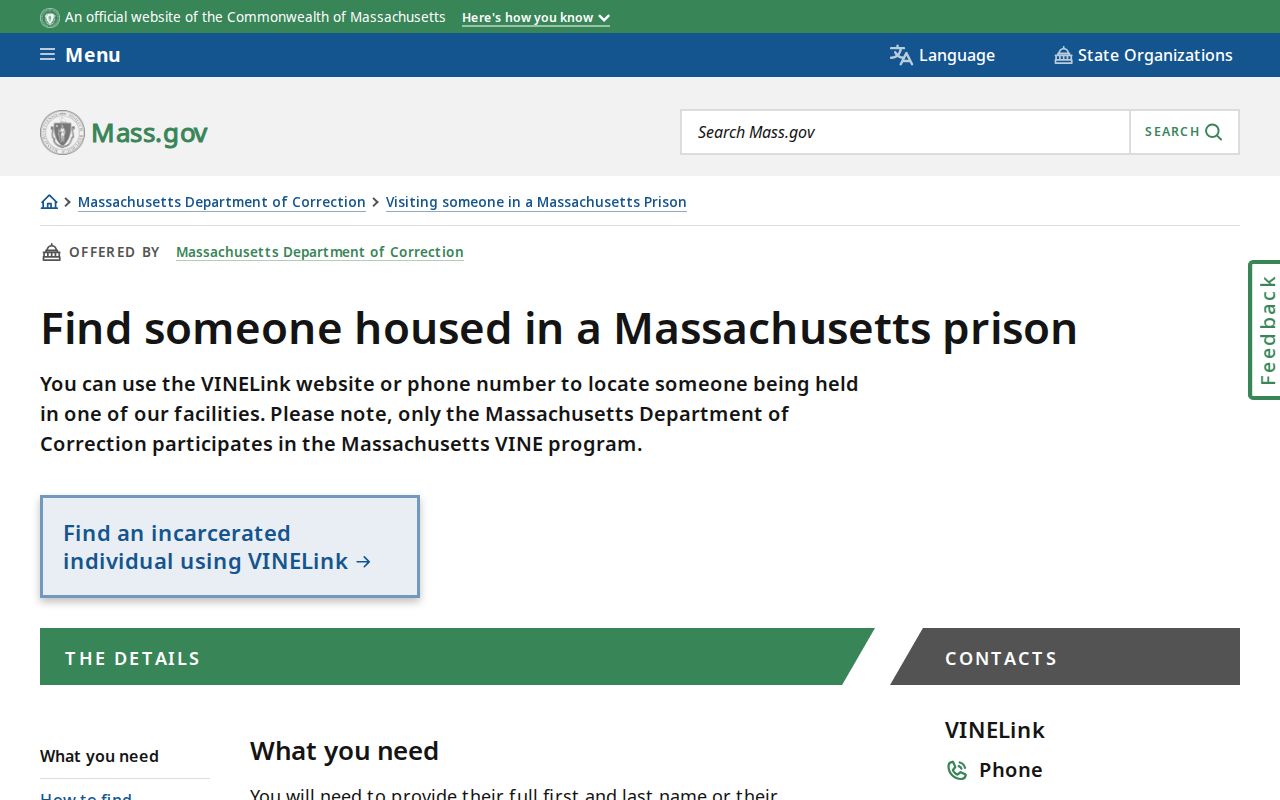
Read the state page before opening the search screen. It spells out which Massachusetts custody records take part in VINE.
Check a DOC Inmate on VINELink
Start only once there is reason to believe the person actually entered Massachusetts DOC custody. A city arrest log or a BCSO phone call covers a different, earlier stage of the record.
- Open VINELink and choose Massachusetts and the Department of Correction context shown by the interface.
- Search with the person's complete first and last name or a DOC commitment number. The commitment number is the stronger identifier when available.
- Review possible matches carefully. Do not select a record based only on a common name.
- Open the matching record and note its identifying number, status, facility, and update information shown by the current interface.
- For a mismatch or website problem, follow VINELink support instructions. Mass.gov notes that the site is not run by DOC.
- For official confirmation, use Massachusetts DOC or call the VINE telephone service at 866-277-7477.
The VINELink search screen is dynamic and may change after a state is selected.

The screen shows the service entry point only. No named person appears there. If the real question is whether someone was recently arrested, begin with the Daily Arrest Report or the Bristol County arrest source map. VINELink sits later in the chain and cannot replace a missing municipal arrest report.
What a Covered Record Can Show
Field labels vary with the current interface and the DOC data behind it. Treat every entry as custody information, not a full criminal-history report.
| Information | Use and boundary |
|---|---|
| Name and identifier | Match the full name and DOC commitment or offender number to reduce wrong-person errors. |
| Custody status | Reflects the participating DOC record and its update cycle, not every local arrest or court event. |
| Facility | Shows the covered location when supplied. A transfer may change this value after the data update reaches VINE. |
| Notification options | Available events and delivery methods appear from the matching record and may change with the interface. |
| Release or transfer event | An alert may report a qualifying custody change. It is not notice of a conviction, dismissal, warrant, or every court date. |
| Photograph | VINELink is not a Bristol County mugshot gallery and does not replace an official photo-record request. |
One person can generate several records. A municipal police report, a court docket, a BCSO booking, and a later DOC record each describe a different stage. A DOC result cannot show where the arrest first happened. A New Bedford or Taunton police log cannot confirm current DOC custody either.
Register for DOC Custody Alerts
Registration starts from the matching VINELink record. Give only contact details the registrant controls, and follow the prompts on screen.
- Confirm the record with a full name and commitment number before selecting notification registration.
- Choose an available contact method, such as telephone, text, or email, when the interface offers it.
- Enter the contact information accurately and create or receive the PIN described on screen.
- Complete any confirmation step. Keep the PIN private because it may be needed to manage or acknowledge notifications.
- Save the DOC identifier and the VINE telephone number separately. Do not rely on one automated channel during a safety-sensitive situation.
- Update the registration if a telephone number or email address changes.
Automated alerts are not fail-safe. Delivery depends on participating data and messaging systems. If a notice is delayed, missed, or changed, rely on DOC and victim-services contacts instead of treating any alert as a safety guarantee.
Confirm County and Federal Custody
For Bristol County custody, call the BCSO inmate-information line rather than assuming the county jail feeds VINELink. The Sheriff's Office posts no public person-level roster. Its homepage shows aggregate counts only. The Securus app handles calls and electronic messaging; it is not an inmate locator or release-alert system. Federal custody has its own tools. The Bureau of Prisons runs one locator, and ICE runs another. Neither connects to Massachusetts DOC VINE. For a municipal arrest, use New Bedford's daily PDFs, Taunton's multi-day logs, or Fall River's Public Records Center. Court outcomes belong to MassCourts and the clerk.
Verify identity, custody status, and court outcome through the responsible agency. No custody result replaces the original police report or the later court record.
Use the Separate Victim Registry
The Massachusetts Victim Notification Registry, called VNR, is separate from public VINELink searching. It serves eligible victims and witnesses. These are people who want notice of movement, escape, or release from qualifying custody. That reach can include county houses of correction. It also covers other situations the DOC-only public search misses. The official VNR registration page lays out who qualifies and how to submit.
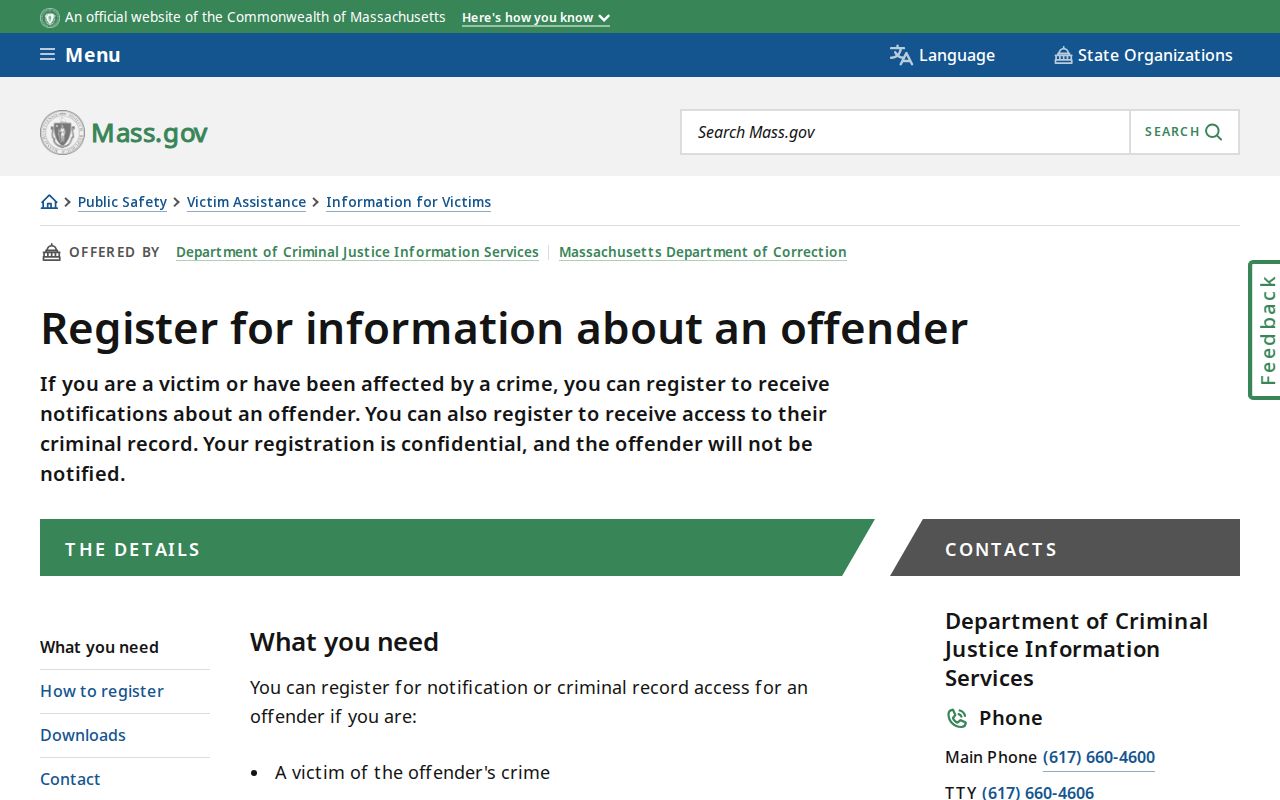
This is a protected victim and witness process, not a public name search. Registration happens online, by mail, email, fax, or in person. Supporting proof may be a police report, a district attorney summons, or a victim-witness letter. Follow the VNR instructions on eligibility and documents. Never send private victim materials to a general search form. The split matters most in Bristol County. A pretrial detainee at Dartmouth or Ash Street may sit outside public VINE. Only DOC participates there. Yet an eligible victim may still have a VNR path tied to that county custody. Match the tool to the purpose. Similar notification names do not mean one shared database.
Reasons a VINELink Search Fails
A blank result screen on VINELink can mean several different things. The name may be misspelled. A commitment number may be wrong. Transfers also take time to show up in the system. Some people sit in county, federal, or immigration custody instead of DOC, so the state lookup will never list them. Or there may be no covered record at all. The screen itself cannot tell you which case applies.
Go back to whichever office created the record. Police logs show whether an agency recorded an arrest, BCSO answers current county custody questions, and the court clerk handles case status. DOC and VINELink cover participating state custody only. Keeping those roles straight stops an empty result from turning into a false conclusion. If safety is at stake, call the victim-services or law-enforcement office right away, or use emergency services, rather than waiting on a web update. VINELink and VNR support notification planning, but neither guarantees personal safety or replaces a direct official confirmation.
From Bristol County Custody to DOC
Getting arrested in New Bedford, Fall River, or Taunton does not send a person into Massachusetts DOC custody. Local police book the arrest. The early record stays local. Police, the court, and BCSO each hold a piece of it. DOC enters only after a state-custody commitment or transfer. That gap explains a common puzzle. A fresh city arrest can return no VINELink match even though the arrest clearly happened.
Watch the dates. Arrest time, county booking time, arraignment, sentencing, transfer, and the VINE update are all separate events. A match needs checking too. Compare the full name and the commitment number. Note the facility listed on the result. When nothing appears, return to whichever agency owns the stage being checked.
A released county detainee can stay absent from DOC VINE while the court docket keeps moving. A sentenced person may appear in DOC data later, but that state record names no city of arrest, so a DOC alert is never a Bristol County booking alert.
Maintain a Reliable Notification Plan
Registration only helps if the contact details stay current. Check the phone number and email saved for alerts. Keep the PIN private, and store the person's full name and DOC commitment number somewhere secure. Follow the site's current delivery instructions. More than one channel may exist, and not every event or method is available.
Massachusetts also runs a confidential Victim Notification Registry for eligible victims and witnesses. That registry covers qualifying county custody situations. The public VINE search only covers DOC. Registration runs through several routes and may require proof, such as a police report, a district attorney summons, or a victim-witness letter. Those documents belong inside that protected process, not a general public lookup.
Automated notices get delayed. Agency updates, transfers, contact problems, and service conditions all play a part. In a safety-sensitive moment, call the victim-services or law-enforcement office directly. VINE and VNR support awareness. Neither one guarantees personal safety or replaces an official confirmation, and neither supplies a complete criminal case record.